Category: Healthcare · Medical Technology · Personalized Medicine


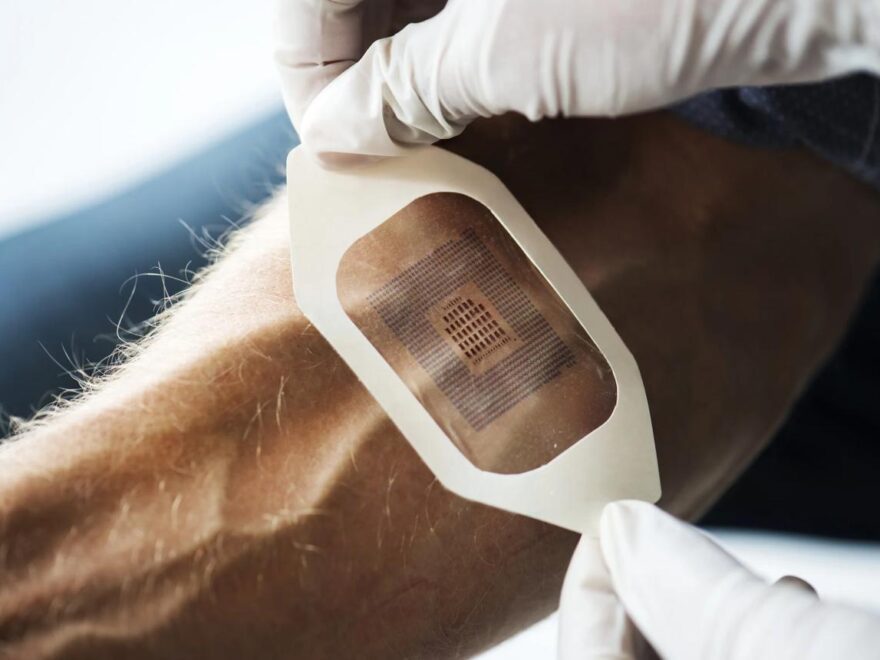
Imagine a tiny patch on your skin that does more than count your heartbeat. It could potentially monitor changes in sweat chemistry, detect inflammation-related signals, measure glucose levels, and help doctors identify early signs of illness. This is the promise of next-generation biosensors—small sensing technologies designed to reveal more about the body’s internal condition.
On October 1, 2026, the Advanced Research Projects Agency for Health (ARPA-H) reportedly announced research awards supporting modular biosensor technology designed to measure a broader range of biological signals. This research direction raises an important question: could future wearable devices transform healthcare from occasional medical testing into continuous, personalized monitoring?
The opportunity is significant, but so are the scientific challenges. Measuring a biological signal is not the same as diagnosing a disease, and a sensor’s usefulness depends on its accuracy, reliability, and ability to provide information that clinicians can act on.
What is ARPA-H’s Delphi biosensor initiative?

The initiative is called Delphi, and its central idea is to replace bulky, single-purpose sensing systems with modular microelectronic components known as chiplets. Each component performs a specialized function, and compatible components can be combined to create a sensor tailored to a particular medical need.
According to ARPA-H’s October 1 announcement, the agency plans to commit up to $117.4 million over 4.5 years to the program. The funded teams are pursuing applications involving heart failure, inflammation, recovery after a heart attack, and perimenopause. These are research and development projects, not a set of commercially available diagnostic products.
The modular approach could make it easier to develop a device for one condition and then adapt its sensing capabilities for another without redesigning the entire platform.
How do next-generation biosensors work?
A biosensor combines a biological recognition mechanism with a system that converts a biological interaction into a measurable signal. Tiny electronics can process that signal and communicate the result to a smartphone or clinical monitoring platform.

1. Collect biological information
The device may measure electrical activity, skin temperature, sweat, or substances in fluid beneath the skin. Some measurements are non-invasive; others require microscopic probes or other minimally invasive designs.

2. Recognize a specific biomarker
Biological receptors, enzymes, engineered proteins, DNA-based probes, or specialized materials respond to a target molecule or change in its concentration.

3. Convert and interpret the signal
Miniaturized electronics translate the sensor response into data. Software can correct noise, combine multiple signals, and identify changes that may deserve attention.
4. Support a medical decision
A validated system could alert a patient or clinician when a measurement or pattern crosses a meaningful threshold. Diagnosis and treatment decisions may still require other tests and professional assessment.
The major innovation is not simply making a sensor smaller. It is making multiple measurements work together reliably over time.
Which biological signals could tiny chips monitor?
Next-generation biosensors could extend health monitoring beyond pulse, movement, and blood glucose. The following table separates promising applications from their current limitations.
| Biological signal | Potential application | Main challenge |
|---|---|---|
| Glucose | Diabetes management | Calibration and measurement reliability |
| Cardiac biomarkers | Monitoring heart failure or recovery after a heart attack | Detecting meaningful changes continuously |
| Inflammatory markers | Tracking inflammation and treatment response | Reliable measurement at very low concentrations |
| Hormones | Understanding perimenopause and hormonal changes | Biological variation and suitable sampling methods |
| Lactate and other metabolites | Exercise recovery and metabolic research | Interpreting levels across different activities |
| Medication levels | Supporting therapeutic drug monitoring | Different drugs require different sensing chemistries |
| Electrolytes and hydration-related signals | Assessing fluid balance in selected situations | Sweat concentration does not always reflect blood levels |
These are potential uses, not interchangeable capabilities. A device validated for glucose cannot automatically measure hormones or inflammatory proteins. Each target requires its own recognition chemistry, calibration, and clinical validation.
Four pioneering research projects to watch

1. MIT: Continuous heart failure monitoring
Researchers are developing a wearable patch designed to track heart failure biomarkers continuously. The proposed system combines low-power electronics with on-chip AI and aims to use body heat as an energy source. If validated, it could help clinicians identify concerning changes between hospital visits.

2. New York University: Monitoring inflammation
This project aims to use microscopic probes placed just beneath the skin and DNA-based sensing technology to monitor inflammation. Its long-term goal is to capture changes in inflammatory biomarkers that may help clinicians follow disease activity and treatment response.

3. University of Washington: Perimenopause monitoring
Engineered proteins in a wearable sensor are being developed to measure biomarkers in sweat associated with the perimenopause transition. A mechanism for refreshing the sensing proteins could help maintain sensitivity during extended use. The project may eventually support more individualized reproductive-health monitoring.

4. Novelna: Monitoring recovery after a heart attack
Novelna is developing a wearable sensor focused on inflammation following a heart attack. The objective is to improve recovery monitoring and potentially reduce avoidable hospital readmissions through better information about patients’ changing biological signals.
These projects illustrate a broader shift: instead of relying exclusively on isolated measurements, researchers want to understand how a patient’s biology changes throughout the day and during recovery.
Recent research shows that multi-biomarker monitoring is becoming possible

ARPA-H’s announcement is part of a wider research movement rather than an isolated development.
A study published in Nature Biomedical Engineering on May 13, 2026, described a wireless, battery-free wearable sweat sensor designed to monitor four substances simultaneously: cortisol, urea, lactate, and glucose. The researchers reported reliable operation for up to 21 days under the tested conditions, using a mechanism that regenerates the sensing material.
This is an important proof of concept because it addresses several practical challenges at once: measuring multiple molecules, maintaining performance, and reducing dependence on frequent manual sensor replacement.
However, results from a research study do not automatically establish suitability for routine diagnosis. The performance of each biomarker measurement must be evaluated for its intended use, including across different people and real-world conditions.
How biosensors could transform personalized medicine
Earlier warning and continuous disease monitoring
Many medical tests provide a snapshot of the body at a particular time. Continuous biosensors could add a timeline, showing whether a signal is stable, gradually changing, or fluctuating unexpectedly.
For example, a validated cardiac-monitoring patch might detect a concerning change in a biomarker pattern before a scheduled appointment. A clinician could then decide whether additional testing is necessary. This would not mean that every abnormal sensor reading represents an emergency, but it could make some forms of monitoring more responsive.
More individualized treatment
Two people with the same diagnosis may respond differently to a medication. In the future, biosensors capable of measuring suitable drug concentrations or treatment-related biomarkers might help doctors understand individual responses and adjust therapy when clinically appropriate.
This application requires particular care: medication dosing must be based on validated measurements and established clinical protocols, not on unverified wearable readings.
Better recovery at home
After surgery, a cardiac event, or another serious illness, some patients need continued observation after discharge. A reliable sensor could transmit selected measurements to a clinical team, helping prioritize follow-up and identify patients who may need assessment sooner.
Remote monitoring could reduce unnecessary travel and improve access to care, although it would require clear alert thresholds, a responsible clinical team, and a plan for responding to abnormal readings.
Reproductive and hormonal health
Hormonal patterns change over time, and symptoms alone may not always provide a complete picture. Wearable hormone-related sensors could eventually contribute additional information about reproductive transitions, including perimenopause.
These devices should complement, rather than replace, clinical assessment. Hormone concentrations vary with timing, physiology, medications, and the biological fluid being measured.
The role of artificial intelligence in biosensor technology
AI could make next-generation biosensors more useful by interpreting combinations of measurements instead of treating each reading as an isolated number.
Continuous biological measurements
Chemical markers, temperature, heart signals and movement
AI-assisted signal analysis
Noise reduction, calibration, pattern detection and uncertainty assessment
Clinically meaningful information
Validated alerts and information for patients and healthcare professionals
AI could help distinguish a genuine biological change from noise caused by movement, temperature, poor skin contact, or sensor degradation. It may also combine multiple signals to estimate when a person needs further assessment.
But an algorithm cannot compensate for an unreliable measurement. If a sensor produces misleading data, AI may confidently interpret the wrong signal. Researchers therefore need representative training data, independent validation, transparent performance reporting, and methods for communicating uncertainty.
What are the biggest challenges?
Despite the promise of tiny biosensors, several obstacles must be resolved before they can become routine medical tools.
Accuracy and biological variation
A biomarker’s concentration in sweat or fluid beneath the skin may not match its concentration in blood. Hydration, exercise, temperature, and individual physiology can affect readings. Researchers must demonstrate that measurements are meaningful for the intended clinical purpose.
Long-term reliability
Sensors can lose sensitivity, accumulate biological material, or produce readings that drift over time. Reusable sensing components and self-calibration mechanisms may help, but their durability must be tested.
Power, comfort and cost
Wearables need to remain comfortable, safe, and affordable while processing and transmitting data. Energy harvesting could extend operating life, but it may not supply enough power for every sensor or application.
Privacy and cybersecurity
Continuous biological data can reveal sensitive information about health and daily life. Secure communication, access controls, informed consent, and limits on data use must be built into the system.
Clinical validation and regulation
A promising prototype must demonstrate safety, analytical accuracy, clinical usefulness, and reliable operation in its intended population. Medical claims also require appropriate regulatory review.
These issues are widely recognized in recent reviews of wearable biosensing.
What could this mean for India?

India could benefit from biosensors that support chronic disease management, home-based monitoring, and healthcare delivery beyond major hospitals. Their greatest value may come from helping patients receive appropriate follow-up without requiring a clinic visit for every routine measurement.
Potential applications include:
- Diabetes care: More convenient glucose monitoring and, eventually, additional validated metabolic measurements.
- Cardiovascular health: Remote monitoring for selected patients with heart disease, particularly during recovery.
- Women’s health: Research into accessible tools for tracking clinically relevant hormonal changes.
- Rural and remote healthcare: Devices that transmit useful information to clinicians where frequent travel is difficult.
- Affordable medical technology: Modular designs that Indian researchers and manufacturers could adapt to local needs, subject to technical and regulatory requirements.
India’s digital-health ecosystem provides a possible foundation for integrating suitable devices with telemedicine and digital health records. However, any device intended to diagnose or monitor disease must meet the relevant medical-device requirements. Privacy and security also matter when sensitive information is transmitted or stored.
For widespread adoption, affordability alone will not be enough. Devices must work reliably in India’s varied climates, be easy to use, support local clinical workflows, and remain useful in settings with limited connectivity or specialist access.
What happens next? The road from research to real-world use
ARPA-H’s Delphi program sets out a staged development pathway. Its teams are expected to demonstrate interoperability and secure communications during the first 18 months, produce an initial in-vivo prototype at the 24-month stage, and complete a clinical trial or human-factors study by the 54-month stage, depending on the type of wearable. These are program milestones, not guarantees of product approval or commercial availability.
The next major breakthroughs will depend on whether developers can demonstrate that their devices work outside controlled laboratory conditions, measure biomarkers consistently, and produce information that improves medical decisions.
If the technology succeeds, future biosensors may become more like modular health platforms: a common electronic foundation paired with specialized sensing components for particular conditions. Such a system could be adapted to a patient’s needs rather than forcing every patient to use the same limited set of measurements.
Conclusion
Next-generation biosensors could mark a major step forward in personalized medicine. By combining tiny sensing components, biological recognition technologies, low-power electronics, and AI-assisted analysis, researchers are working toward devices that measure far more than heart rate or daily activity.
ARPA-H’s Delphi initiative highlights the potential to monitor cardiac biomarkers, inflammation, hormonal changes, and recovery after a heart attack. Meanwhile, recent scientific research into multi-biomarker sweat sensors demonstrates how several biological signals may be measured by a single wearable platform.
The key question is no longer simply whether a tiny chip can detect a molecule. It is whether the device can measure that molecule accurately over time, interpret its significance, protect the patient’s data, and improve care.
The future of biosensors will be defined not by how much data they collect, but by how reliably that data helps people and healthcare professionals make better decisions.