Category: Health Technology · Wearables · Artificial Intelligence · Preventive Healthcare
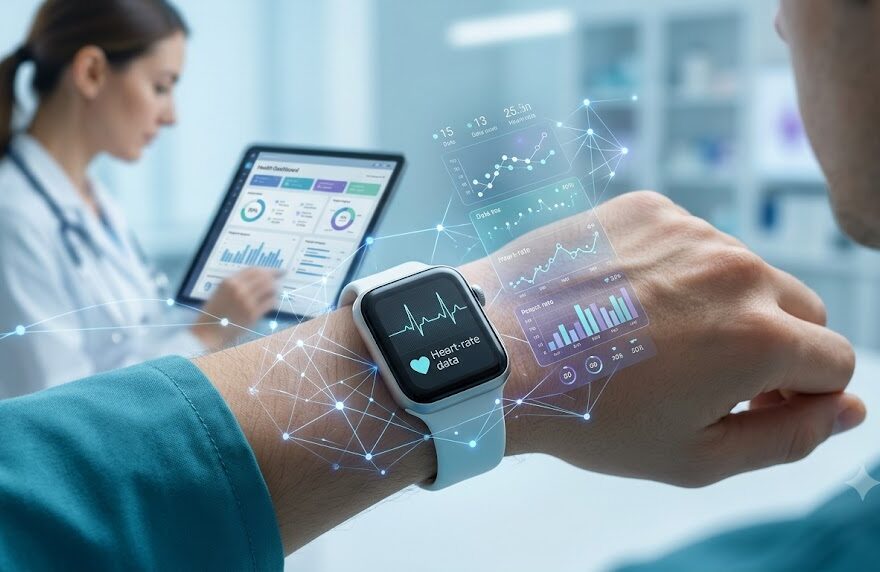
AI-powered wearables are changing how researchers and healthcare professionals think about disease prevention. Smartwatches, fitness bands, smart rings, and continuous health-monitoring devices can collect physiological data throughout the day. Artificial intelligence (AI) can analyze these signals to identify patterns that may indicate changes in a person’s health before obvious symptoms appear.
The central research question is whether these technologies can reliably detect health problems early enough to improve outcomes—or whether they sometimes generate false alarms, unnecessary anxiety, and misleading predictions.
This is a promising research topic for a health and technology blog because it connects wearable devices, machine learning, preventive medicine, data privacy, and the future of personalized healthcare.


Introduction: From tracking fitness to predicting health risks
For many years, wearable devices were primarily used to count steps, measure exercise, and estimate calories burned. Today, some devices can also measure heart rate, estimate blood oxygen saturation, record an electrocardiogram (ECG), and monitor sleep patterns. Certain specialized wearables can track glucose levels or other physiological signals.
The next development is combining these measurements with AI to identify meaningful changes over time.
Instead of looking at one heart-rate reading, an algorithm can analyze weeks of measurements and compare them with a person’s usual pattern. A sustained change in resting heart rate, disrupted sleep, declining activity, or unusual heart rhythms might prompt further investigation.
This approach is known as predictive healthcare: using information about a person’s health to estimate risks and potentially intervene before a condition becomes more serious.
A 2026 scoping review in the Journal of Medical Artificial Intelligence found growing research interest in AI-integrated wearables for continuous monitoring, disease-risk prediction, and personalized healthcare. However, the review also identified significant challenges involving validation, data quality, privacy, and integration into clinical practice.
The important distinction is that detecting an unusual signal is not the same as diagnosing a disease or proving that early detection improves health outcomes.
How AI-powered wearables work

AI wearables combine sensors, software, and algorithms to transform physiological measurements into information that may be useful for health monitoring.
Sensors collect continuous health information
Different sensors capture different aspects of the body.
Optical sensors use light to estimate pulse rate and related changes in blood flow. Accelerometers and gyroscopes measure movement, helping devices estimate activity and detect some falls. Skin-temperature sensors measure temperature at the skin rather than directly measuring internal body temperature.
ECG-capable devices record electrical signals from the heart. Sleep-monitoring systems may combine movement, heart rate, and other signals to estimate sleep duration and patterns.
Continuous glucose monitors use a small sensor inserted under the skin to measure glucose in interstitial fluid. These are specialized medical devices, not ordinary smartwatch sensors.
The accuracy and usefulness of each measurement depend on the device, its intended purpose, sensor placement, environmental conditions, and the person using it.
Machine learning identifies patterns
AI algorithms process the collected measurements to identify relationships that may be difficult to recognize from individual readings.
For example, an algorithm might compare a person’s resting heart rate during several weeks, account for typical daily variation, and flag a persistent deviation. Another model might examine heart-rhythm recordings for patterns associated with atrial fibrillation.
Some systems use predefined thresholds. Others use machine-learning models trained on large datasets containing physiological measurements and reference diagnoses.
More advanced approaches combine multiple signals, sometimes called multimodal analysis. A model could examine heart rate, movement, sleep, and temperature together rather than treating each measurement independently.
However, more data do not automatically produce more accurate predictions. Poor-quality measurements, biased training data, and inappropriate model design can generate misleading results.
Alerts can trigger further medical assessment
A wearable may notify a user when it detects a potentially abnormal pattern. Depending on the device, the next step might be repeating a measurement, recording an ECG, contacting a healthcare professional, or undergoing a conventional diagnostic test.
The device should be viewed as an early-warning tool, not an independent replacement for clinical assessment.
The US Government Accountability Office’s August 2026 assessment highlights both the potential of wearables to support timely, personalized care and the problems caused by variation in device reliability and integration into healthcare workflows.
Which health problems might AI wearables detect earlier?
Not every disease can be detected through a wristwatch or ring. Evidence is stronger for certain applications than for others.

Heart rhythm abnormalities
Some ECG-enabled smartwatches and optical pulse-monitoring systems can identify patterns suggestive of atrial fibrillation, a heart rhythm disorder associated with increased stroke risk. A notification requires appropriate confirmation and clinical interpretation.

Glucose abnormalities
Continuous glucose monitors can reveal glucose patterns throughout the day and night. AI can help interpret these patterns, support diabetes management, and in certain integrated systems assist treatment decisions. This is a more established use of specialized sensors than attempting to diagnose diabetes using an ordinary smartwatch.

Sleep disorders and disrupted sleep
Wearables estimate sleep duration, movement, and other sleep-related signals. Algorithms may help identify patterns warranting evaluation for conditions such as sleep apnea, but consumer sleep scores are not equivalent to a formal sleep study.

Changes in mobility and daily functioning
Long-term activity and movement data may reveal declining mobility or changes in daily routines. Researchers are investigating whether such patterns can support early risk assessment for frailty and cognitive impairment. Evidence for predicting individual outcomes remains variable.

Deterioration in people with chronic conditions
In supervised monitoring programs, changes in physiological measurements may help clinicians recognize worsening health and decide whether to reassess a patient. The usefulness depends on the condition, the monitoring system, and whether a reliable clinical response pathway exists.
These applications should not be treated as equally proven. Evidence that a device can recognize a particular signal does not establish that it can reliably predict all diseases or prevent serious complications.
What does the latest research tell us?
Research published in 2025 and 2026 suggests that AI wearables are advancing beyond fitness tracking. Nevertheless, researchers are still determining which applications offer measurable clinical benefits.
Promising evidence
Atrial fibrillation detection
A 2026 review of wearable and AI-assisted atrial fibrillation detection describes how some systems can identify potentially abnormal heart rhythms and support earlier diagnosis. However, accuracy varies by device and study, and evidence that consumer-wearable screening reduces strokes or deaths remains unresolved.
Developing research
Wearables for diabetes and prediabetes
A systematic review published in npj Digital Medicine in 2025 examined AI and wearable technology in diabetes and prediabetes management. This research area includes personalized monitoring and glucose-related interventions, but the usefulness of a specific system depends on the sensors, intended use, and clinical evidence.
Flexible biosensors and multimodal AI
A 2026 review in npj Flexible Electronics describes advances in wearable and implantable biosensors that combine physiological measurements with AI analysis. Important remaining challenges include motion-related errors, long-term reliability, energy requirements, privacy, and interpretation of results.
The overall research direction is encouraging, but there is a critical distinction between technical performance and clinical benefit. A model can classify patterns accurately in a research dataset without necessarily helping people live longer or avoid serious illness.
Can AI predict disease before symptoms appear?
In some circumstances, AI can identify patterns associated with a health condition before a person recognizes symptoms. Whether it can do so reliably depends on the condition and the data available.
Consider a hypothetical example.
A person wears a smartwatch for several months. The device establishes a baseline for resting heart rate, sleep, and daily activity. Later, the system identifies an unusual change in several measurements.
The algorithm might flag the change for further assessment. A clinician could then determine whether it reflects illness, stress, medication effects, dehydration, a change in exercise, or ordinary variation.
The wearable has identified a potential warning sign—not the underlying cause.
The predictive healthcare pathway
Continuous monitoring
Sensors collect heart rate, movement, sleep, or other measurements.
AI pattern analysis
Algorithms compare measurements with baselines and identify unusual patterns.
Potential risk alert
The system prompts a repeat measurement or appropriate medical review.
Clinical confirmation
A qualified healthcare professional evaluates the findings and determines the next steps.
This process could reduce delays in recognizing certain problems. However, a prediction is valuable only if it is sufficiently reliable, reaches the right person, and leads to an appropriate intervention.
The benefits of AI wearables in preventive medicine
Personalized health monitoring
Traditional health assessments often capture a person’s condition at a particular moment. Wearables can provide repeated measurements across different activities and times of day.
This longitudinal information may help healthcare professionals distinguish a person’s usual pattern from a persistent change. It could also support more personalized recommendations when interpreted alongside medical history and other clinical information.
Earlier medical attention
Some health problems occur intermittently. A short appointment or occasional test may not capture an abnormal event. Continuous or repeated monitoring increases the opportunity to record certain abnormalities.
For example, a wearable may capture a possible irregular heart rhythm that would otherwise go unnoticed. A subsequent diagnostic evaluation can establish whether the finding is clinically significant.
Better support for chronic conditions
People managing diabetes, cardiovascular conditions, or other chronic illnesses may benefit from remote monitoring when the system is designed for their condition and connected to an appropriate care team.
Clinicians may use relevant trends to decide whether treatment needs review or whether additional tests are necessary. Monitoring can also help patients understand how sleep, activity, and daily routines relate to their health.
Improved access to remote care
Remote monitoring may help patients who live far from specialist services or have difficulty attending frequent appointments.
In India, this could be useful in selected rural and underserved communities, provided that devices are affordable, connectivity is adequate, and trained healthcare professionals can review the results. Digital monitoring alone cannot overcome shortages of medical staff or access to diagnostic testing.
The GAO’s 2026 assessment identifies improved access to remote care and more timely clinical information as potential advantages while emphasizing reliability and implementation challenges.
The limitations: Why AI wearables can get it wrong

False positives and unnecessary anxiety
A false positive occurs when a system flags a potential problem that is not actually present.
Movement, poor sensor contact, irregular but harmless rhythms, or other factors can produce misleading readings. Users may become worried, seek unnecessary consultations, or undergo additional tests.
The opposite problem is a false negative: the device fails to detect a genuine abnormality. A normal reading must not be interpreted as proof that a person is healthy.
Limited diagnostic capability
Most consumer wearables measure only a limited set of physiological signals. They cannot independently perform all the examinations required to diagnose conditions such as cancer, many infections, or internal organ diseases.
Researchers may investigate indirect signals associated with particular conditions, but associations do not automatically translate into dependable individual predictions.
Bias and unequal accuracy
An AI system trained on data from a narrow group of people may perform less reliably for other populations.
Age, skin characteristics, underlying health conditions, medication use, and differences in sensor placement can affect measurements or algorithm performance. Devices need appropriate validation across the populations in which they will be used.
Privacy and data security
Wearables can collect sensitive information about heart rhythms, sleep, activity, and daily routines. Depending on the device and associated services, data may be transferred to cloud platforms or shared with other parties.
Users should understand what information is collected, how long it is stored, who can access it, and whether it is used for purposes beyond direct health monitoring.
Researchers are exploring approaches such as on-device processing and federated learning to reduce unnecessary transfers of personal data. These approaches can improve privacy protections, but they do not eliminate every security risk.
Cost and the digital divide
Advanced wearables may be expensive, require frequent charging, or depend on smartphones and reliable internet access.
If preventive healthcare becomes increasingly dependent on these devices, people who cannot afford them could miss out on some benefits. Healthcare systems should avoid treating ownership of a smartwatch as a prerequisite for good care.
AI wearables versus conventional medical tests
| Feature | AI wearables | Conventional medical tests |
|---|---|---|
| Monitoring | Often repeated or continuous | Often performed at specific times |
| Best use | Tracking trends and identifying selected warning signs | Diagnosing or investigating specific conditions |
| Convenience | Can be high for everyday use | May require a clinic, laboratory, or medical appointment |
| Accuracy | Varies by sensor, device, and intended use | Varies by test and clinical circumstances |
| Medical interpretation | Often requires confirmation | Usually interpreted within a clinical assessment |
| Main limitation | Incomplete measurements and false alerts | May miss intermittent problems or require repeat testing |
These approaches are complementary rather than competing alternatives. Wearables may help identify who needs further assessment, while established diagnostic methods help determine what is actually happening.
What should consumers know before trusting a health wearable?
Choosing a wearable for health monitoring requires more than comparing its advertised features.
- Check its intended use. A wellness tracker is not automatically a medical diagnostic device.
- Understand its limitations. Review which measurements it actually collects and what its alerts mean.
- Look for clinical validation. Evidence for one device or algorithm does not establish the accuracy of another.
- Protect personal data. Examine privacy settings, data-sharing permissions, and account security.
- Use alerts appropriately. Follow the manufacturer’s guidance and seek professional advice when warranted.
- Do not delay urgent care. Serious symptoms require appropriate medical attention even if a wearable reports normal measurements.
For example, chest pain, severe breathlessness, fainting, or signs of a stroke require urgent medical evaluation. A smartwatch cannot safely rule out an emergency.
Future research: What comes next?

The next phase of research is likely to focus on making AI wearables more reliable, accessible, and clinically useful.
Multimodal health prediction
Combining heart rhythm, activity, sleep, temperature, and selected biochemical measurements could give algorithms a broader view of changing health patterns. The challenge is to demonstrate that combining signals improves meaningful clinical outcomes rather than simply increasing the number of alerts.
Explainable AI
Healthcare professionals need to understand why an algorithm has flagged a particular pattern. Systems that provide interpretable reasons for alerts may be easier to evaluate, although explanations must themselves be validated.
More privacy-preserving analysis
On-device AI may allow some measurements to be analyzed locally. Federated learning may allow models to be trained across participating institutions without centralizing all raw patient data. Both approaches require careful security and governance.
Long-term clinical trials
Researchers need prospective studies that evaluate what happens after a wearable produces an alert. Relevant outcomes include time to diagnosis, unnecessary investigations, treatment changes, quality of life, healthcare costs, and serious health events.
The US Food and Drug Administration’s guidance on AI-enabled medical devices emphasizes safety and effectiveness across development, deployment, monitoring, and modification. This is particularly important as algorithms and software evolve.
Conclusion: Can AI wearables detect health problems earlier?
AI-powered wearables can help identify certain health abnormalities earlier by monitoring physiological signals and analyzing changes over time. Their most promising applications include selected heart-rhythm abnormalities, glucose monitoring with specialized sensors, and remote monitoring for particular chronic conditions.
But predictive healthcare is not simply about collecting more data or building more sophisticated algorithms. Its success depends on reliable measurements, independent clinical validation, responsible handling of personal information, equitable access, and effective follow-up care.
The most realistic future is one in which wearables complement doctors and conventional medical tests—not one in which an algorithm replaces clinical judgment.
The key research question is no longer just whether AI can detect unusual health signals, but whether acting on those signals leads to earlier treatment and better outcomes without causing unnecessary harm.