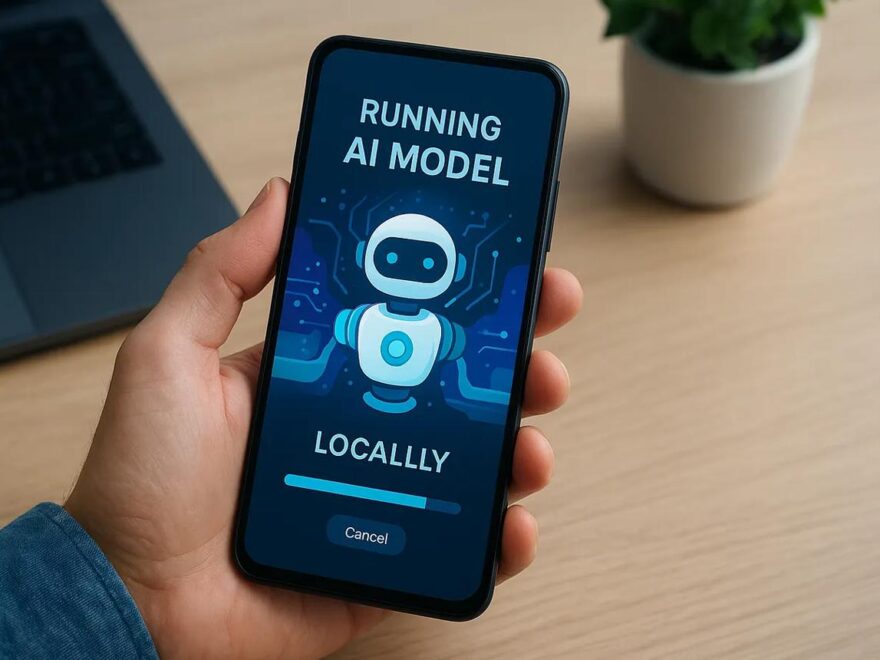
How Small AI Models, Edge Computing, Privacy-Focused Systems, and Local Intelligence Are Changing the Future of Computing


Introduction: The Future of AI May Not Always Need the Internet 🌐➡️📱
For years, artificial intelligence has depended heavily on the cloud.
When users interact with AI assistants, generate images, summarize documents, or translate languages, most of the processing happens inside massive data centers operated by technology companies.
The cloud model made advanced AI accessible to millions of people. However, it also created challenges:
- Dependence on internet connections
- Privacy concerns
- Data storage issues
- Higher energy consumption
- Delayed responses
A new AI revolution is emerging: offline intelligence.
Instead of sending every request to remote servers, future devices will increasingly run AI directly on smartphones, laptops, and personal computers.
This shift is powered by:
- Smaller AI models
- Edge computing
- Specialized AI chips
- Local data processing
- Privacy-focused technology
The future of AI may not only be in giant cloud systems.
It may be inside the devices people carry every day.
1. What Is Offline AI? 🤖
Offline AI refers to artificial intelligence systems that operate directly on a device without requiring constant internet access.
Unlike cloud-based AI:
Cloud AI:
- User sends data to servers
- Servers process information
- Results are returned
Offline AI:
- Device processes information locally
- Data stays on the device
- Results are generated immediately
Examples of offline AI include:
- Smartphone voice assistants
- Local image generation
- AI writing tools
- Offline translation
- Personal AI assistants
- Smart camera features
The goal is to create powerful AI experiences without always depending on external servers.
2. The Rise of Small AI Models 🧠


One of the biggest developments making offline AI possible is the creation of smaller AI models.
Large AI models require enormous computing power and cloud infrastructure.
However, researchers are developing compact models that can run efficiently on personal devices.
These smaller models are designed to:
- Use less memory
- Consume less energy
- Respond faster
- Operate locally
Why Smaller Models Matter
A massive AI model may contain billions of parameters, but not every task requires maximum size.
For example:
A smartphone does not need the world’s largest AI model to:
- Improve photos
- Translate languages
- Summarize notes
- Manage reminders
A specialized smaller model can perform these tasks efficiently.
3. Edge Computing: Bringing AI Closer to Users ⚡
Edge computing is a technology approach where data processing happens closer to where data is created.
Instead of sending information to distant servers, devices process information locally.
Examples include:
- Smartphones analyzing photos instantly
- Cars processing sensor data
- Smart cameras detecting movement
- Wearable devices monitoring health information
Why Edge AI Is Growing
Edge AI provides several advantages:
Faster Responses
Local processing eliminates delays caused by sending information back and forth to servers.
Better Reliability
AI can continue working even without internet access.
Lower Cloud Costs
Companies can reduce dependence on expensive data centers.
Improved Privacy
Personal information stays closer to the user.
4. Smartphones Becoming AI Computers 📱
Modern smartphones are evolving into powerful AI devices.
New generations of mobile processors include dedicated AI hardware designed specifically for machine learning tasks.
These AI chips can support:
- Real-time language translation
- Intelligent photography
- Voice processing
- Personalized recommendations
- Security features
AI Cameras
Smartphone cameras already use AI to:
- Detect scenes
- Improve lighting
- Remove unwanted objects
- Enhance portraits
Future cameras may understand entire environments and automatically adjust images based on context.
AI Assistants on Phones
Future phone assistants may operate locally to:
- Organize schedules
- Search personal files
- Summarize messages
- Answer questions privately
The smartphone may become a personal AI companion that understands the user’s habits.
5. AI Laptops: The New Generation of Personal Computers 💻


Computers are also entering the era of local AI.
Modern laptops increasingly include specialized AI processors called Neural Processing Units (NPUs).
These chips allow devices to perform AI tasks efficiently.
Future AI laptops may offer:
Intelligent Productivity
AI could:
- Summarize documents
- Organize files
- Create presentations
- Assist with writing
Personal Knowledge Systems
A laptop-based AI assistant could understand:
- Your documents
- Your work patterns
- Your projects
- Your preferences
Because processing happens locally, sensitive information can remain private.
6. Privacy-Focused AI: Keeping Data Personal 🔒
One of the biggest advantages of offline AI is privacy.
Cloud AI often requires sending information to external servers.
This creates concerns about:
- Personal data storage
- Security risks
- Unauthorized access
Local AI changes this approach.
Sensitive information such as:
- Personal conversations
- Private documents
- Photos
- Business files
can remain on the user’s device.
The Personal AI Era
Privacy-focused AI could create truly personal assistants.
Instead of a general AI system knowing millions of users, each person could have an AI model that understands only their information.
7. Offline AI in Everyday Life 🌎
Local AI could transform many areas.
Healthcare Devices
Wearable devices could analyze health information instantly without sending sensitive data elsewhere.
Examples:
- Smart watches
- Fitness trackers
- Medical monitoring devices
Travel
Phones could provide:
- Offline translation
- Navigation assistance
- Local recommendations
Education
Students could use AI tutors without requiring constant internet access.
Professional Work
Employees could use private AI assistants for:
- Document analysis
- Coding help
- Research
- Data processing
8. AI Running Inside Cars and Smart Devices 🚗🏠
The future of AI is not limited to phones and laptops.
Many smart devices will include local intelligence.
Autonomous Vehicles
Cars need instant decision-making.
Local AI helps vehicles process:
- Camera information
- Road conditions
- Traffic situations
without waiting for cloud responses.
Smart Homes
Future homes may use local AI to:
- Manage energy usage
- Recognize household members
- Control devices
- Improve security
9. Challenges of Offline AI ⚠️
Although offline intelligence offers many benefits, it also faces limitations.
Limited Computing Power
Phones and laptops cannot match the power of massive data centers.
Developers must create efficient models.
Storage Requirements
AI models require memory and storage space.
Smaller models must balance performance and size.
Updates and Improvements
Cloud AI systems can update instantly.
Local AI requires users to download new models and improvements.
Device Costs
Advanced AI hardware may increase device prices.
10. The Future: Personal AI Inside Every Device 🚀
The next generation of computing may combine cloud AI and local AI.
Cloud systems will handle:
- Massive research tasks
- Large-scale AI training
- Complex calculations
Personal devices will handle:
- Private information
- Daily assistance
- Real-time tasks
- Personalized experiences
This hybrid approach could create the best of both worlds.
The future computer may not simply be a machine that runs applications.
It may become an intelligent partner that understands its owner.
Conclusion: AI Is Moving From the Cloud Into Our Hands 🌟
For years, artificial intelligence lived mostly inside remote data centers.
Now, AI is moving closer to users.
Smartphones, laptops, cars, and everyday devices are becoming capable of running intelligent systems locally.
Small AI models, edge computing, and privacy-focused technology are creating a new era where intelligence is not only powerful but also personal.
The future of AI may not be defined only by the biggest models in the cloud.
It may be defined by billions of small, intelligent systems quietly working on the devices people use every day.
The next AI revolution may happen right in your pocket. 📱🤖