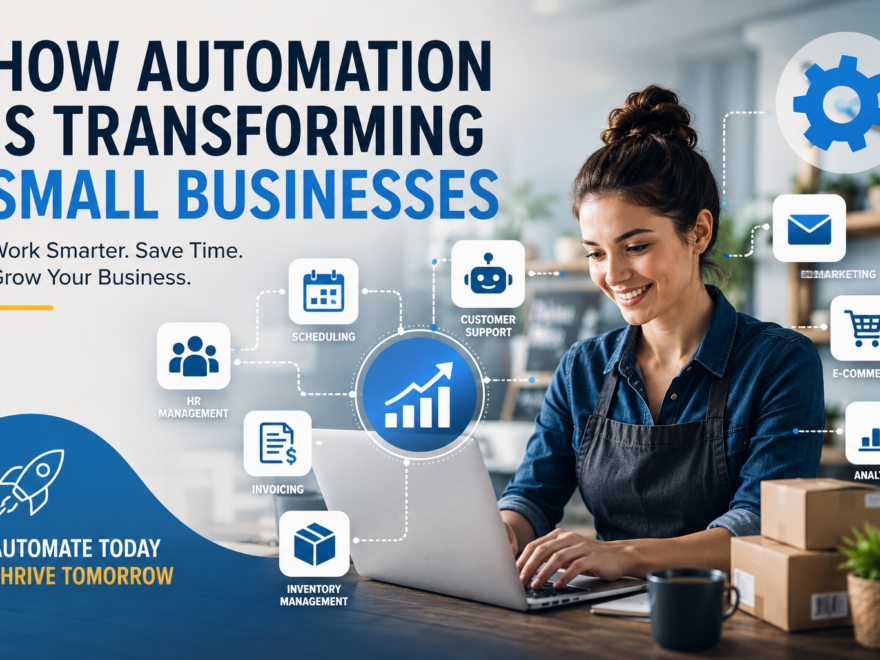
Small businesses have always faced a common challenge: achieving more with limited resources. Owners often juggle multiple responsibilities, including sales, marketing, customer service, inventory management, accounting, and employee scheduling. As competition increases and customer expectations continue to rise, automation has become an essential tool rather than a luxury.
Automation enables businesses to streamline repetitive tasks, reduce human error, save time, and improve productivity without significantly increasing operational costs. Thanks to affordable cloud-based software and artificial intelligence (AI), even startups and local businesses can now access technologies that were once available only to large corporations.
In 2026, automation is reshaping nearly every aspect of small business operations. From AI-powered customer support to automated accounting systems, companies are finding smarter ways to work while delivering better customer experiences.
🤖 What Is Business Automation?
Business automation is the use of software, artificial intelligence, robotics, and digital tools to perform repetitive or routine business processes with minimal human intervention.
Instead of manually completing the same task every day, businesses configure software to automatically perform actions such as:
- Sending invoices
- Scheduling appointments
- Managing inventory
- Responding to customer inquiries
- Processing payroll
- Running marketing campaigns
- Tracking employee attendance
Automation doesn’t replace business owners—it helps them focus on strategic work that drives growth.
Why Small Businesses Are Adopting Automation
Several factors have accelerated automation adoption.
Rising Labor Costs
Hiring additional staff can be expensive. Automation helps businesses increase productivity without proportionally increasing payroll costs.
Customer Expectations
Customers now expect:
- Instant replies
- Fast delivery
- Personalized experiences
- 24/7 support
Automation makes these expectations easier to meet.
Affordable Cloud Software
Many automation platforms now offer monthly subscriptions instead of expensive enterprise licenses, making them accessible to small businesses.
Artificial Intelligence
AI-powered automation can:
- Write emails
- Generate reports
- Analyze customer behavior
- Recommend products
- Answer customer questions
Key Areas Where Automation Is Transforming Small Businesses
1. Customer Service Automation
Customer support has changed dramatically.
Instead of answering every inquiry manually, businesses use AI chatbots to:
- Answer FAQs
- Track orders
- Book appointments
- Process returns
- Escalate complex issues
Benefits
✅ Faster responses
✅ Lower support costs
✅ 24/7 availability
✅ Improved customer satisfaction
2. Marketing Automation
Marketing automation allows businesses to nurture leads without constant manual effort.
Tasks that can be automated include:
- Email newsletters
- Social media posting
- Customer segmentation
- Promotional campaigns
- Follow-up emails
- Lead nurturing
Example
When someone subscribes to a website:
Day 1 → Welcome email
Day 3 → Product recommendations
Day 7 → Discount coupon
Day 14 → Customer review request
Everything happens automatically.
3. Sales Automation
Sales teams benefit significantly from automation.
Automation tools can:
- Track leads
- Schedule follow-ups
- Generate quotations
- Send proposals
- Record customer interactions
- Update CRM systems
Sales representatives spend less time on paperwork and more time selling.
4. Accounting Automation
Manual bookkeeping is time-consuming and prone to errors.
Accounting software can automatically:
- Record transactions
- Generate invoices
- Calculate taxes
- Reconcile bank statements
- Track expenses
- Prepare financial reports
Benefits include:
- Better financial visibility
- Fewer accounting mistakes
- Faster month-end closing
5. Inventory Management
Inventory automation helps businesses maintain optimal stock levels.
Modern systems automatically:
- Track inventory
- Alert low stock
- Generate purchase orders
- Predict demand
- Monitor suppliers
This reduces:
- Overstocking
- Stock shortages
- Lost sales
6. Human Resource Automation
HR automation simplifies employee management.
Automated HR systems handle:
- Attendance
- Payroll
- Leave requests
- Recruitment
- Employee onboarding
- Performance tracking
Small businesses save hours every month.
7. Appointment Scheduling
Businesses like salons, clinics, consultants, and repair services use scheduling software that:
- Books appointments
- Sends reminders
- Prevents double bookings
- Allows online rescheduling
This reduces missed appointments and administrative work.
8. Invoice and Payment Automation
Automation simplifies payment collection.
Businesses can automatically:
- Generate invoices
- Send payment reminders
- Accept online payments
- Track overdue invoices
Improved cash flow is one of the biggest benefits.
9. Social Media Automation
Managing multiple social media platforms manually takes time.
Automation tools help businesses:
- Schedule posts
- Publish content
- Analyze engagement
- Monitor comments
- Generate reports
Consistency improves brand visibility.
10. AI Content Creation
Generative AI now helps businesses create:
- Blog posts
- Product descriptions
- Email campaigns
- Advertising copy
- Social media captions
- Customer FAQs
This significantly reduces content creation time.
Benefits of Automation for Small Businesses
Increased Productivity
Employees spend less time on repetitive tasks and more time solving problems, innovating, and serving customers.
Reduced Costs
Automation lowers operational expenses by minimizing manual labor, reducing errors, and improving efficiency.
Better Customer Experience
Customers appreciate faster responses, personalized communication, and seamless service.
Improved Accuracy
Automated systems reduce mistakes caused by manual data entry.
Scalability
As businesses grow, automated systems can often handle increased workloads without requiring proportional staffing increases.
Better Decision-Making
Automation platforms generate valuable reports and dashboards, helping business owners make data-driven decisions.
Industries Benefiting Most from Automation
Automation is creating value across many sectors.
Retail
- Inventory tracking
- Online order management
- Customer loyalty programs
Restaurants
- Online ordering
- Kitchen management
- Staff scheduling
Healthcare
- Appointment booking
- Patient reminders
- Billing
Education
- Student enrollment
- Online assessments
- Attendance tracking
Real Estate
- Lead management
- Property listings
- Client follow-ups
Manufacturing
- Inventory control
- Production monitoring
- Quality assurance
Professional Services
- Document generation
- Billing
- Project management
Common Automation Tools Used by Small Businesses
Popular categories include:
- Customer Relationship Management (CRM)
- Accounting software
- Email marketing platforms
- AI writing assistants
- Helpdesk software
- Project management tools
- Scheduling applications
- E-commerce automation
- Inventory management systems
Many platforms integrate with one another, allowing information to flow automatically between systems.
Challenges of Automation
While automation offers significant benefits, businesses should also consider potential challenges.
Initial Setup
Implementing automation requires planning and configuration.
Employee Training
Staff members need training to use new systems effectively.
Integration Issues
Different software tools may require integration to work together smoothly.
Data Security
Businesses should ensure that automated systems comply with data privacy regulations and use secure authentication.
Over-Automation
Not every task should be automated. Personal interactions remain important, especially in customer relationships and complex decision-making.
Best Practices for Implementing Automation
To maximize success:
- Identify repetitive tasks that consume significant time.
- Start with one or two automation projects instead of automating everything at once.
- Choose tools that integrate well with your existing systems.
- Train employees thoroughly.
- Monitor results and optimize workflows regularly.
- Keep human oversight for critical decisions and customer interactions.
The Future of Automation for Small Businesses
The next wave of automation is expected to include:
- Smarter AI assistants capable of handling more complex business tasks.
- Predictive analytics that forecast customer demand and sales trends.
- Voice-controlled business management.
- Hyperautomation, where multiple automated systems work together seamlessly.
- Personalized customer experiences driven by real-time data.
These advancements will help small businesses compete more effectively in an increasingly digital marketplace.
Conclusion
Automation is transforming small businesses by simplifying operations, improving efficiency, reducing costs, and enhancing customer experiences. Affordable AI-powered tools have made automation accessible to businesses of all sizes, enabling owners to focus on innovation and growth rather than repetitive administrative tasks.
Successful automation doesn’t mean replacing people—it means empowering them. By thoughtfully automating routine processes while preserving the human touch where it matters most, small businesses can build stronger customer relationships, make better decisions, and remain competitive in a rapidly evolving business landscape.